2026-08-05 · 11 min read
How to Hand Off an API Bug With One Clean JSON Example
How to turn a vague API complaint into one clean failing example that another developer can reproduce, compare, and fix without three rounds of clarification.
Search intent
For people who need to report or investigate a broken API response without wasting a day on screenshots, half-trimmed payloads, and unclear expectations.
Key takeaways
- Start with one reproducible failing example, not a folder full of similar payloads.
- Compare the broken response against a known-good sample before you guess at the cause.
- Validate the contract separately from the implementation details.
- A small, readable bug report usually gets acted on faster than a giant raw dump.
Tool workflow
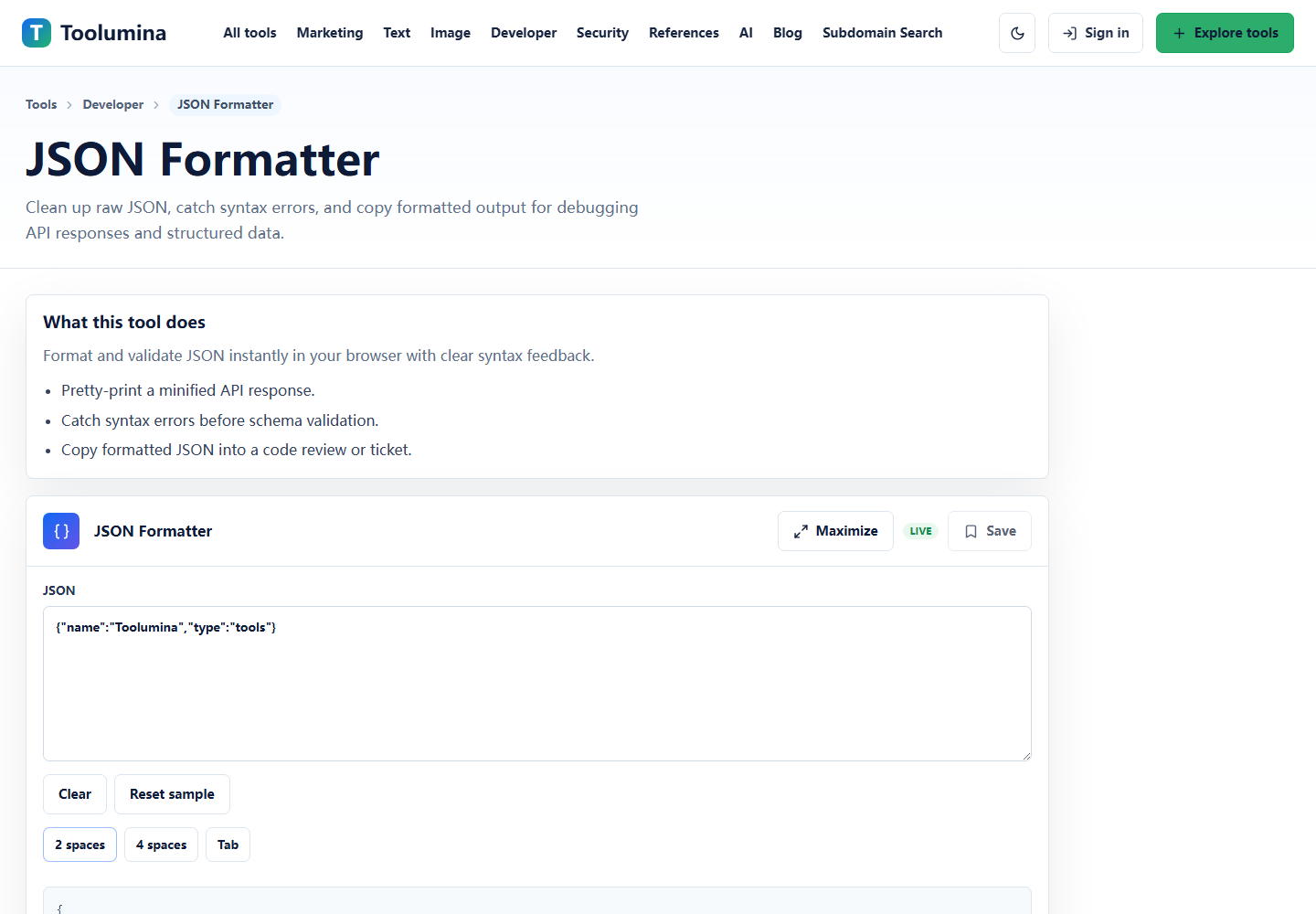
Format one failing response first
Take the response that actually caused the problem, format it into something readable, and stop there. You do not need twelve payloads until one clear example has been understood.
JSON FormatterCompare broken and working samples
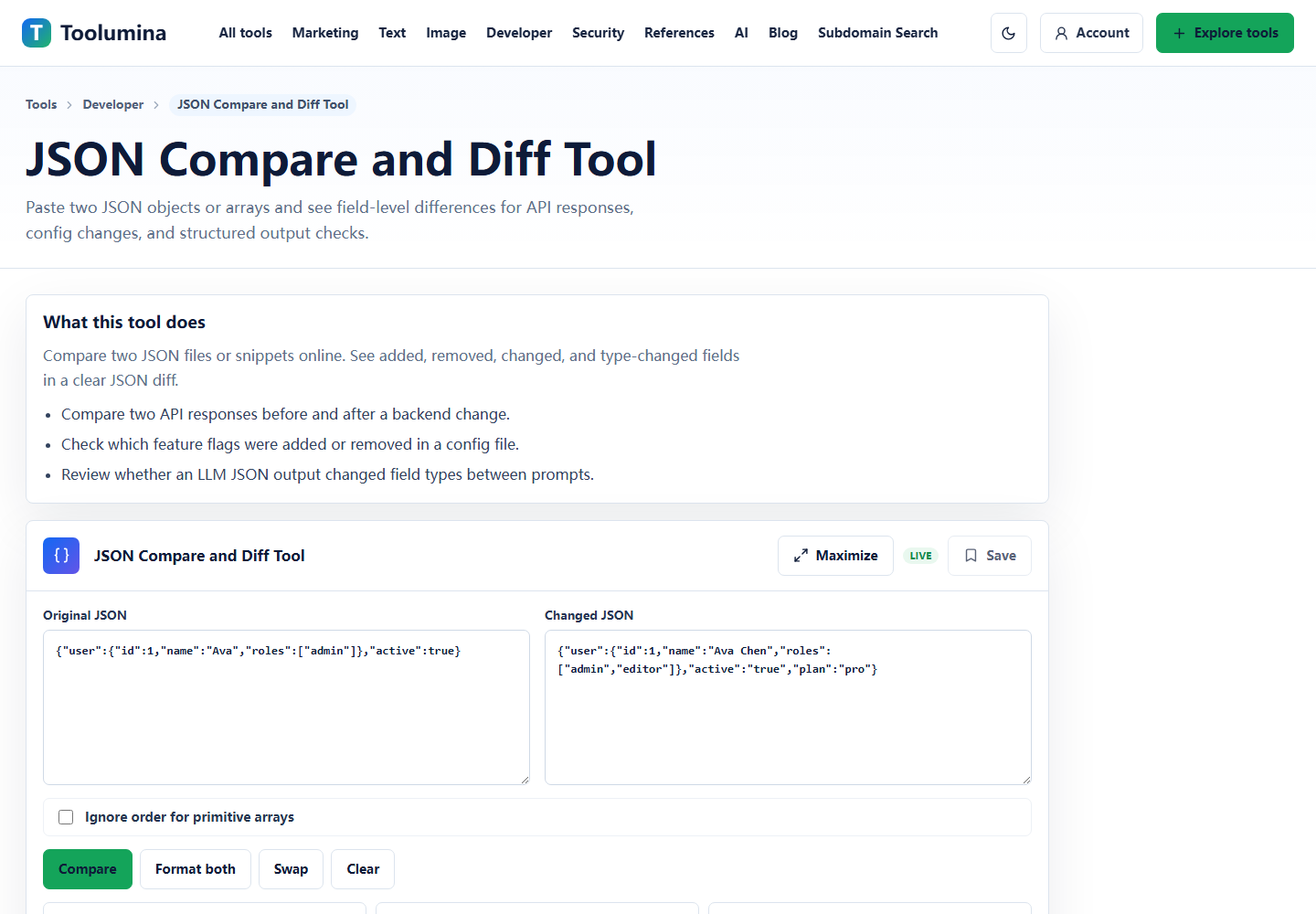
Put the failing response next to a working one from the same endpoint or flow. Field-level differences usually tell you more than a paragraph of theory.
JSON Compare and Diff ToolCheck the contract before escalating
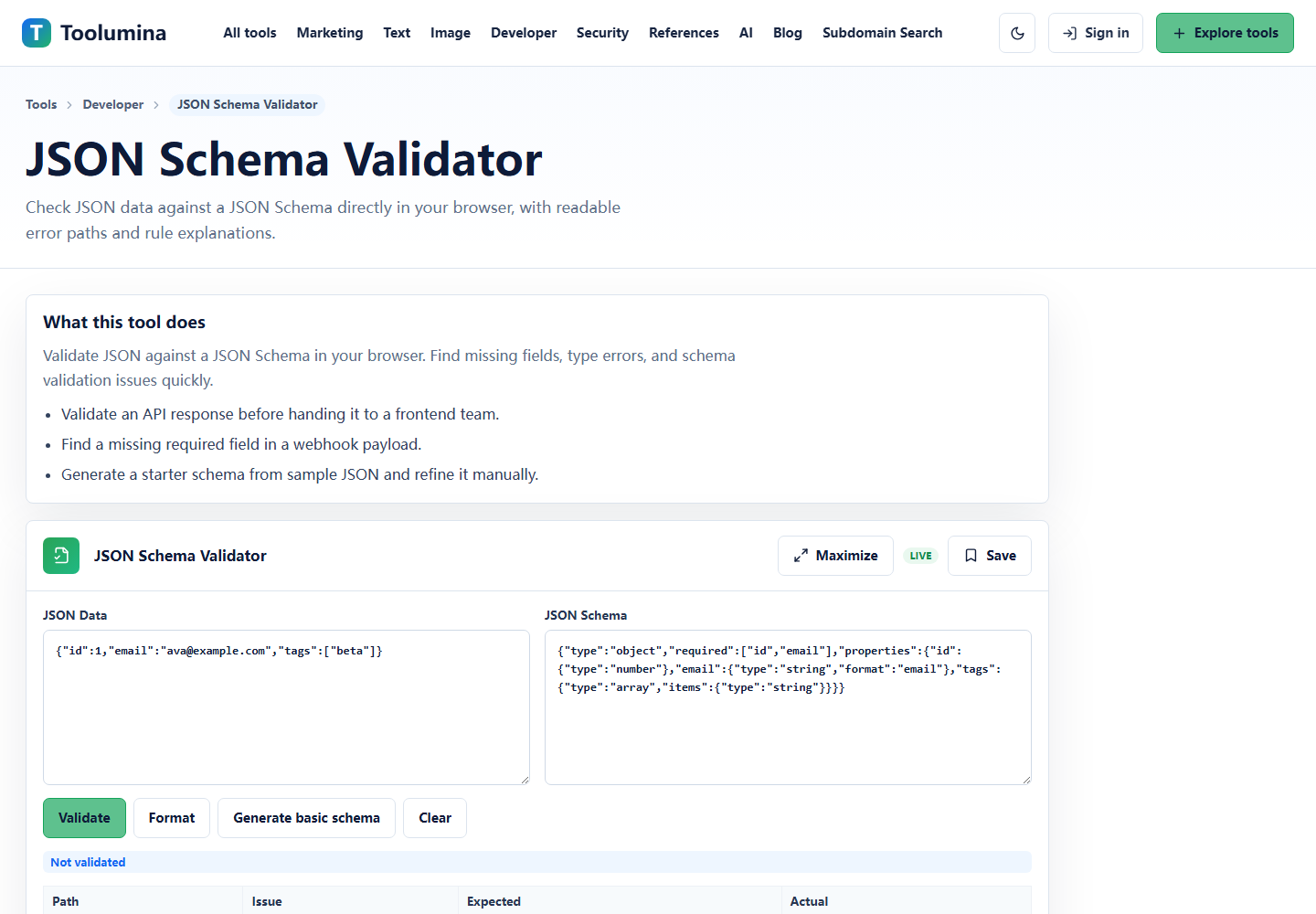
Validate the sample against the expected schema and normalize timestamps if time fields are involved. This helps separate a real contract break from a misunderstanding in the client.
JSON Schema ValidatorScreenshots from the workflow
Start with the smallest example that still shows the problem
A lot of API bug reports go sideways because the first artifact is too messy. Someone pastes a giant response body into chat, highlights three lines, and adds 'this endpoint is wrong'. The backend team asks which field is wrong. The frontend team says the page broke. Support adds that it only happens for some customers. Half a day goes by before anyone is looking at the same thing.
The version that actually works is simpler: one failing example that is small enough to read and complete enough to reproduce the issue. If the page breaks because an array is empty when the client expects one item, show that array. If the date is wrong, show the exact timestamp field. If a boolean changed type and became a string, keep the surrounding object but remove unrelated noise. The goal is not to impress anyone with how much data you collected. The goal is to make the failure obvious.
- Keep the request path, method, and one relevant response sample together.
- Strip unrelated records if they do not change the conclusion.
- Do not lead with screenshots when the real issue is structured data.
A working example is often more useful than a longer explanation
When you can, pair the broken response with one working response from the same flow. That comparison tends to shrink the problem fast. Maybe the working sample has `status: "active"` and the failing one has `status: null`. Maybe `items` changed from an array to an object. Maybe the same field exists in both responses but the timestamp switched from seconds to milliseconds. These are the kinds of differences that actually move debugging forward.
This is where people often overtalk the problem. They write three paragraphs about what they think the service is trying to do. Most of the time, the comparison already tells the story. If the diff is clean, the engineer reading it can usually decide what to inspect next without a meeting.
- Compare one working sample and one failing sample from the same endpoint.
- Call out type changes, missing fields, empty arrays, and renamed keys.
- Treat formatting changes as noise unless the client literally parses strings by shape.
Validate the contract before you argue about the fix
Teams lose a lot of time when they jump straight from 'the page broke' to 'the backend changed something'. Sometimes that is exactly what happened. Sometimes the API is still within contract and the client made a brittle assumption. Schema validation helps you separate those two cases without guessing.
If the response fails the schema because a required field disappeared or a type changed, that is a solid signal. If the sample passes schema validation and the UI still breaks, the conversation shifts. Now you can say the payload matches contract but the consuming code does not handle a real-world case well. That is a better debugging handoff than vague blame in either direction.
- Validate the exact sample that caused the failure.
- Use the schema result to distinguish contract drift from client fragility.
- Do not keep debating assumptions once the sample has been checked.
Time fields are a quiet source of fake bugs
Dates create some of the most annoying API bugs because they often look fine at first glance. A timestamp can be in seconds instead of milliseconds. A UTC value can be rendered as local time without anyone noticing. A field named `expiresAt` can be technically valid but interpreted differently by two systems because nobody wrote down whether the boundary is inclusive.
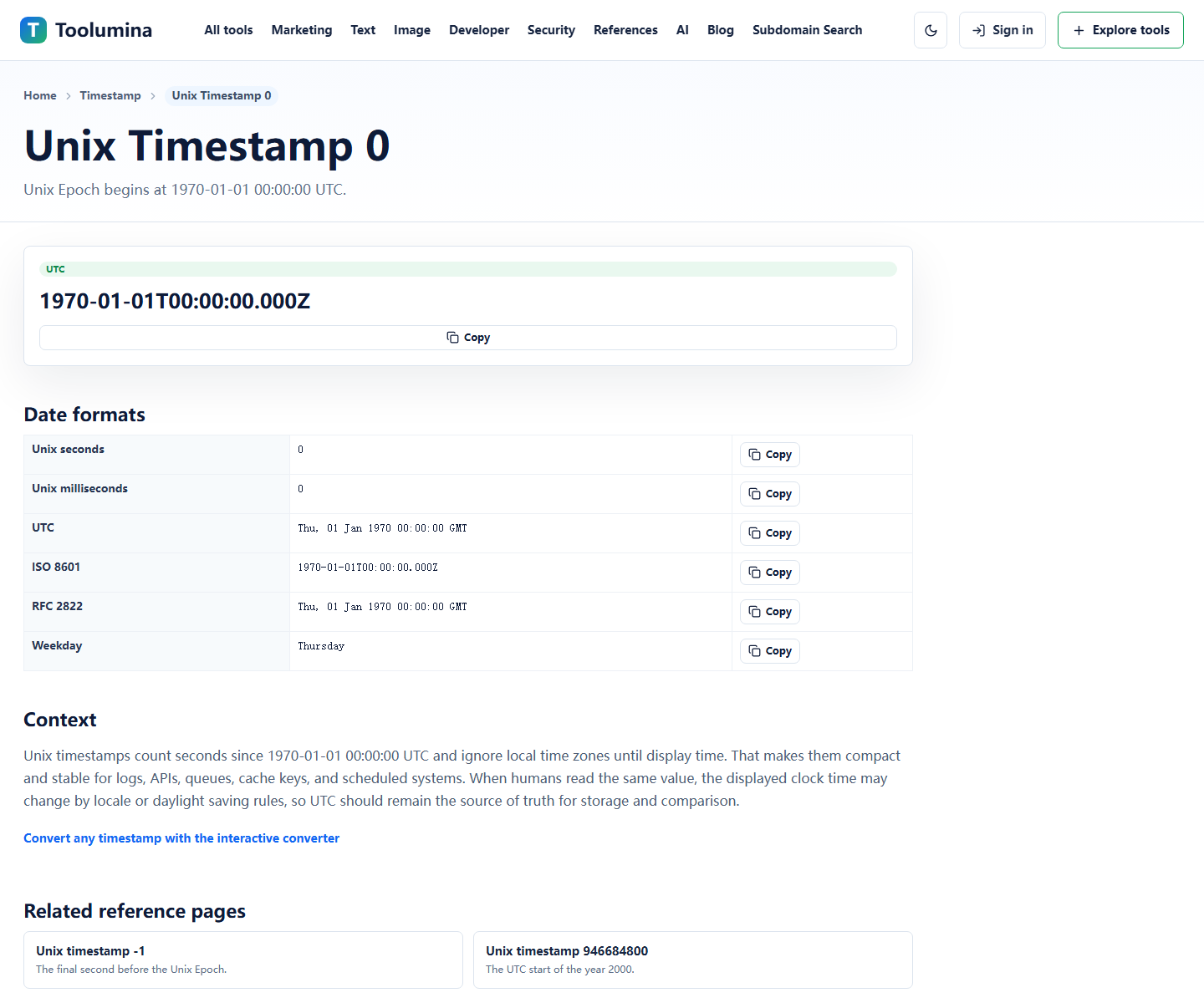
If the report involves scheduling, expiration, message ordering, or token validity, convert the relevant timestamps into readable dates before you send the handoff. This is a small step, but it prevents the classic thread where one person thinks the value is correct and another person is reading it in the wrong unit.
- Check whether the value is seconds or milliseconds.
- Show at least one human-readable UTC time in the report.
- Mention the user's timezone only if the bug is presentation-related.
Write the handoff note so the next person can act immediately
The best API bug report is not the longest one. It is the one that tells the next person where to look. A short note with the endpoint, the failing condition, one clean sample, one comparison sample, and the observed impact is usually enough. That gives engineering something reproducible and gives product or support something understandable.
What slows teams down is narrative padding: ten screenshots, copied Slack messages, and three versions of the same payload pasted in different places. If the report is tidy, another developer can often reproduce the issue and start testing a fix before they ever reply. That is usually the difference between a same-day fix and a long clarification loop.
- State the endpoint, expected behavior, actual behavior, and impact in plain language.
- Attach one broken sample and one useful comparison sample.
- If you replaced sensitive values, say so without changing the field shapes.
Background notes
Why raw dumps are harder to use than people expect
A huge payload feels thorough, but it is usually harder to debug because the important field is buried in everything else. Most engineers would rather receive one carefully prepared example than a full export with no guidance.
Good bug reports reduce search space. They do not just increase volume.
Sensitive data still needs handling discipline
If your sample contains tokens, email addresses, internal IDs, or customer details, clean those carefully before sharing outside the right channel. But keep the structure intact. A badly sanitized payload that changes types or removes the relevant nesting can accidentally hide the real issue.
The safest habit is to replace values consistently while preserving the parts of the payload that explain the bug.